

Why Chain Stores Become Confusing as They Expand: Visual Inconsistency, Brand Breakdown & Solutions
In Malaysia, more and more businesses are growing from single stores into chain expansions. But as they scale up, a common problem appears: The more outlets they open, the less they look like the same brand.
This leads to: Lower brand recognition Weaker customer trust Inconsistent advertising performance Higher difficulty in franchise expansion
The real issue is not "expanding too fast", but: a lack of a unified Visual Branding System.
What Is a Chain Store Visual Management System?
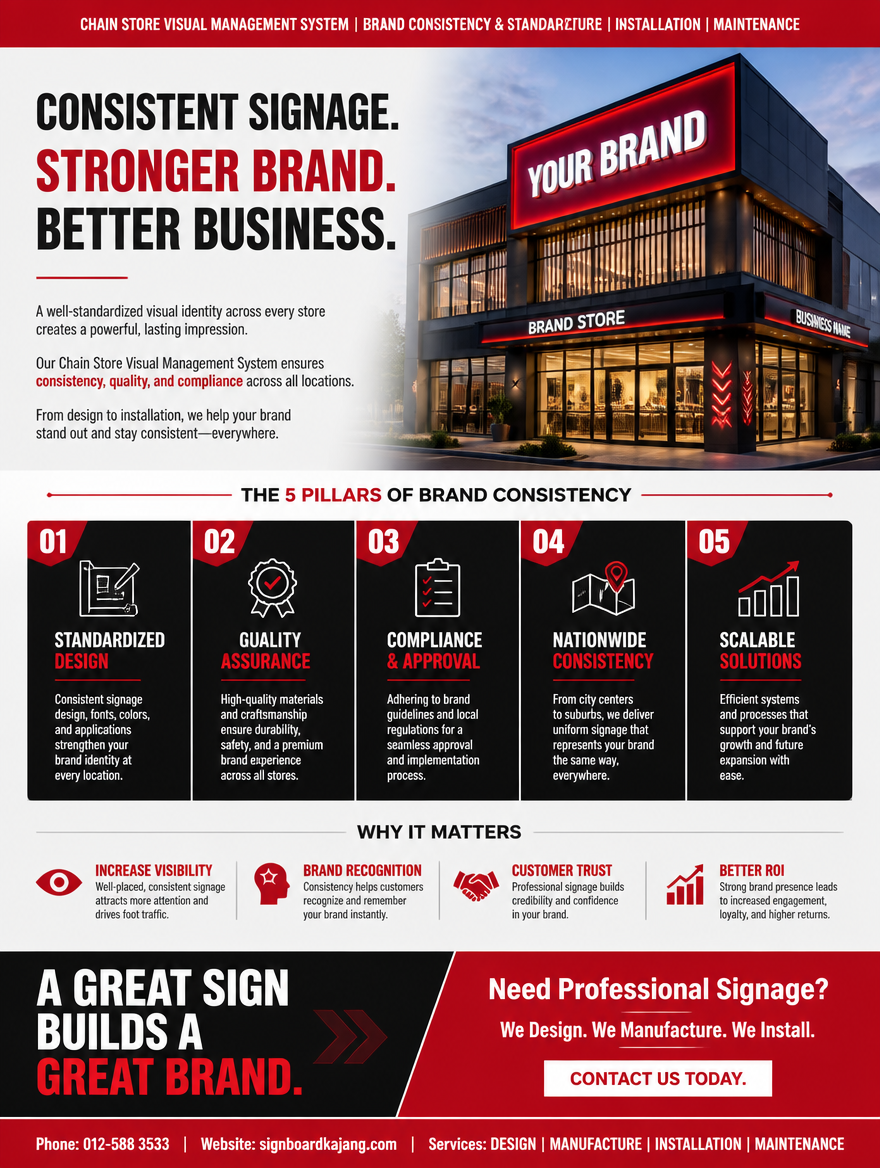
A Chain Store Visual Management System is a complete framework designed to ensure consistent brand visuals and standardized execution across all store locations. It includes: Signboard system Shopfront design standards Interior visual identity Lighting system standards Material and construction standardization Brand color and typography guidelines
The main goal: No matter whether customers walk into a store in KL, Kuantan, Penang, or Johor Bahru, they can instantly recognize it as the same brand.
5 Core Systems of Chain Store Visual Management
1. Brand Identity System
Builds a unified "DNA" for the brand. Includes: Brand primary/secondary colors, logo usage standards, typography system, layout spacing and design rules.
Common issues: Different colors across stores, distorted logos, inconsistent fonts. Result: The brand loses a consistent and recognizable identity.
2. Signboard & Shopfront System
The signboard is the customer's first visual touchpoint. Standardization includes: Signboard size & proportion guidelines, LED lighting types, unified typography standards, backboard material standards (ACP/Acrylic).
Goal: The brand should be instantly recognizable from 30 meters away.
3. Interior Branding System
Many brands fail because: "The exterior looks like a brand, but the interior feels like a local shop." Standards include: Wall design style, product display presentation, unified POP advertising style, interior color scheme system.
4. Lighting Design Standard
Lighting directly defines the "premium feel" of a brand. Unified standards: Color temperature (Cool White / Neutral White), brightness levels, key lighting focus areas.
Lighting is the first factor that shapes customers' perception of professionalism.
5. Material & Build Standard System
Standard materials: ACP panels, Acrylic illuminated lettering, Stainless steel metal lettering, Standard paint color codes.
Core value: Lower cost + higher consistency + controlled construction risk
Why Is Visual Consistency So Important for Chain Brands?
When visual identity is inconsistent: Diluted brand value Lower customer trust Reduced conversion rates
Visual consistency brings: Stronger brand recall Faster trust building (within 3 seconds) Easier franchise expansion More stable advertising ROI
Common Mistakes (Made by 90% of Chain Brands)
Each store designs its own signboard independently No brand guideline Inconsistent lighting and color Materials vary by contractor No visual quality control
Result: The more the brand expands, the less control it has over its identity.
How to Build a Replicable Chain Brand System
Step 1: Develop a Brand Guideline
Step 2: Standardize the signboard template system
Step 3: Define lighting and material standards
Step 4: Build a consistent interior visual system
Step 5: Ensure all outlets follow the same system
Summary: The Core of Chain Branding Is Not Expansion, but Replication
A successful brand must achieve: Visual consistency Standardized execution A replicable system Strong brand recognition
Whether every store delivers a consistent visual experience is the real measure of chain brand success.
Call / WhatsApp Us: 012-588 3533 Website: signboardkajang.com
Disclaimer: Information provided is for reference only. We do not bear responsibility for any inaccuracies or consequences arising from its use.



